
Snapshot
John Wesley believed that true Christian faith must extend beyond personal piety into radical generosity and social action. By challenging believers to gain, save, and give all they can, he linked economic stewardship directly to caring for the poor and upholding human dignity. Discover how Wesley’s bold vision for faith in action still holds the power to transform the modern-day church.
Introduction
John Wesley created sermons on Christian economics and good deeds towards the poor. He wrote sermons called “The Use of Money,” “The Danger of Riches,” “The Good Steward,” “On Visiting the Sick,” and even an article called “Thoughts Upon Slavery.” Wesley had plenty to say regarding social issues and helping the poor. Due to Wesley being the founder of Methodism, one can imagine that early Methodists followed in his path. Wesley is the prime example of the great contributions Methodism has made to Christianity at large. We will look at a few of Wesley’s contributions and a few things the modern-day church should take as seriously as Wesley did.
The Dangers of Death and Three Maxims of Money
Wesley had a very strong view of economics and how a Christian should handle riches. Toward his later years, he had growing fears regarding both British and American Methodism—specifically, that Methodism would become a dead faith. This meant he feared Methodism would have the outward form of religion but lack its power, a decline brought about by riches. He believed piety and zeal would be lost by seeking wealth.
This fear led Wesley to address the issue in his sermon, “The Use of Money,” where he outlines three maxims for using money properly:
- Gain all you can: Wesley used this first rule to address Christians who were lazy, wanting to ensure that the Christian community—and especially his circuit preachers—worked hard.
- Save all you can: This second rule teaches Christians frugality and to cut out needless expenses. A Christian should not spend money on things that please the flesh.
- Give all you can: Wesley did not stop at saving; if he had, it would encourage getting rich. Instead, this third rule prevents one from accumulating wealth. It enables believers to give to the poor and needy, helping as many people as possible.
Often the poor are looked down upon, but Wesley believed all people were created in the image of God and should be helped because of it.
Living the Faith: Works of Mercy and Personal Presence
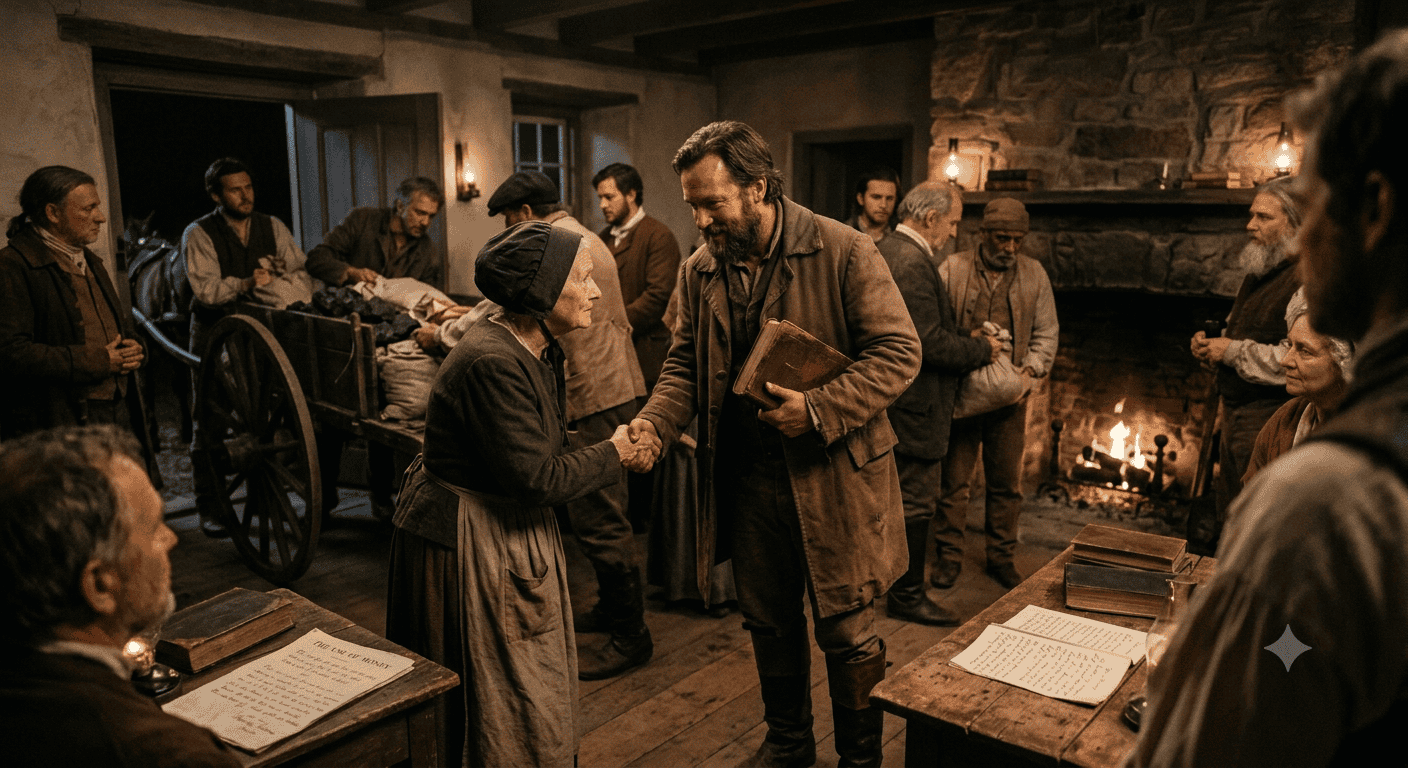
Wesley was passionate about works of mercy. He used his network of class meetings to distribute essential goods such as food, clothing, and fuel. He was so dedicated to helping those in need that he personally assisted people in the British Isles who required medical treatment, proving that he lived what he preached.
In his sermon “On Visiting the Sick,” Wesley points out that we should not help those who are sick from a distance, but actively visit them. He went so far as to say that anyone who desires to inherit the kingdom of heaven should perform the duty of visiting the sick.
The Theology of Grace and Practical Action
Theologically speaking, Wesley emphasized helping the poor and visiting the sick as an aspect of repentance. Often, when Christians think of repentance, they think of an internal work of grace—a grace that changes the heart and resolve. For Wesley, there was a necessary external element to this deep working of grace; external actions are the outward expressions of inward grace.
Visiting the sick and helping the poor are not things believers do to be saved. Rather, they are the fruit of the work that has already been done within them.
Standing Against Injustice: Wesley on Human Dignity and Slavery
Wesley offered strong critiques toward slaveholders, believing enslaved people were in an afflicted state. He called on people to wake up to the evils of human bondage, directly challenging merchants, slave ship captains, and plantation owners.
A major element of Wesley’s critique was that slave ownership violates the moral law and the “Golden Rule.” Wesley’s theology frequently leveraged the moral law because he believed it to be holy, just, and good—an “incorruptible picture of the high and holy One that inhabiteth eternity.”
Because all humanity is created in the image of God, Wesley believed in the inherent dignity of every person. While unredeemed humanity sees the moral law unclearly, redeemed Christians see it vividly and should reflect this divine picture in their actions.
What the Modern Church Can Learn from Wesley
The modern-day church can learn greatly from Wesley, especially regarding his three maxims on economics. It often seems as if Christians in the United States keep their finances separate from their faith, creating a divide between spending habits and Christian principles.
American Christianity would improve greatly if it adopted the practice of saving all it can in order to give all it can. Wesley’s warnings on the dangers of riches directly address contemporary cultural issues. If modern Christians began living economically according to Wesley’s principles, the church would be energized—serving as a true light to the world and a city on a hill.
What Now?
- The Wesleyan Budget: Put Wesley’s economic maxims into practice by setting a cap on your personal standard of living and directing all surplus income straight toward helping those in need.
- In-Person Mercy: Honor the image of God in others by serving those who are sick or struggling face-to-face, giving your personal presence rather than just donating money from a distance.
Continue the Conversation
- Wesley’s Legacy: Economics, Mercy, and the Call for the Modern ChurchSnapshot John Wesley believed that true Christian faith must extend beyond personal piety into radical generosity and social action. By… Read more: Wesley’s Legacy: Economics, Mercy, and the Call for the Modern Church
- Genesis 1: Value & Rest Beyond What You DoSnapshot Genesis 1 offers a profound narrative challenge to both ancient and modern worldviews. Unlike other creation myths, God creates man… Read more: Genesis 1: Value & Rest Beyond What You Do
Teaching Library
Engagement
Contact me: Jed.Wilson.Pastor@Gmail.com